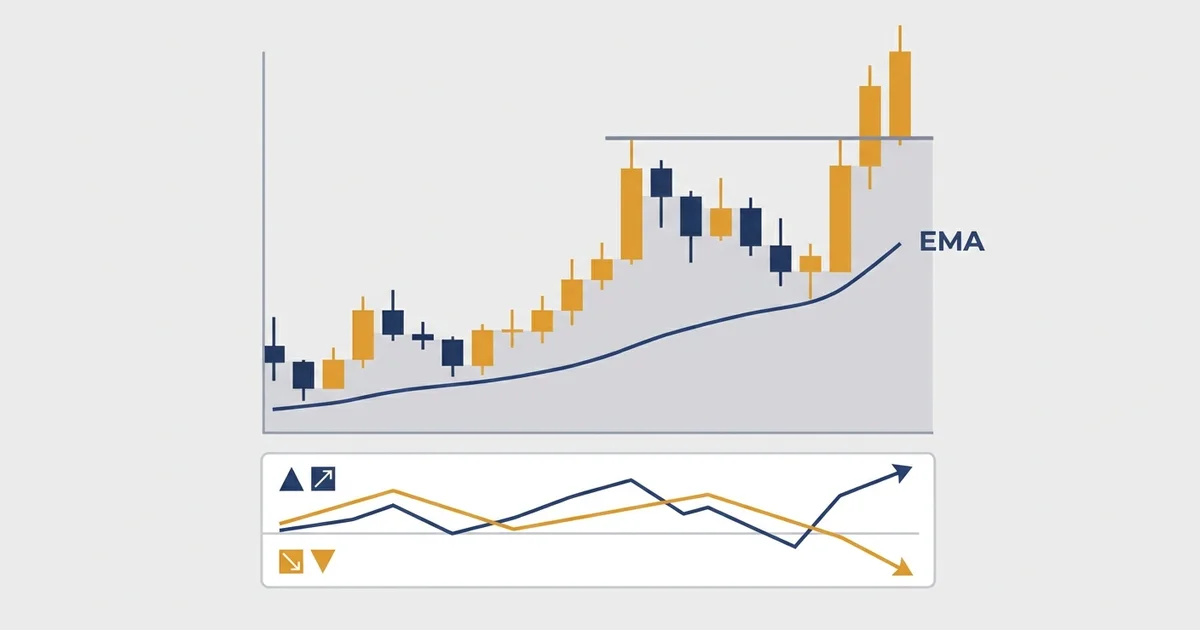

Why crypto markets behave differently
The stock market closes at 4pm. Banks have regulatory backstops. Crypto does not work that way.
There’s no central market maker, no closing bell, and no single regulator setting the rules globally. That creates two things simultaneously: genuine opportunity for active traders and execution risks that traditional markets don’t have.
I’ve caught 15–20% BTC swings that started during the Asian session while equity traders were offline. I’ve also been stuck in 8% flash crashes where spreads tripled in five minutes on altcoin CFDs. Both scenarios happen regularly, sometimes in the same week.
Two rules that matter more in crypto than any other asset:
- Session timing shapes your results. The 14:00-16:00 UTC window (US pre-market overlap with EU close) produces the most reliable signals on BTC and ETH. Volume is highest, spreads narrow, and directional moves that begin here tend to extend rather than reverse immediately.
- News overrides charts. Most chart patterns fail during major events. Not sometimes. Most of the time. Filter every trade against a macro calendar: Fed meetings, CPI prints, ETF decisions, major protocol upgrades. These override any technical setup I’ve used.
There’s one counterintuitive thing I found after years of testing indicators on crypto: RSI overbought and oversold signals work better on the weekly chart than the daily. On the daily, overbought readings persist for weeks during strong trends. On the weekly, those signals mark genuine exhaustion. The last BTC ATH cycle had a clear weekly RSI divergence printing before the reversal. The daily RSI had been “wrong” for months while the weekly was building a precise signal.
Spot, futures, or CFDs: which market to use
Three market structures give you access to crypto price movements. Each has different mechanics and different risks.
Spot trading means buying the actual coin. You own BTC, hold it, and sell it. No leverage by default, no funding rates, no liquidation from a leveraged position going against you. The cleanest structure for someone still building their first strategy.
Crypto futures via Binance Futures or Bybit give you leveraged exposure without owning the underlying asset. The default leverage on these platforms runs up to 125×. Treat futures like spot when starting out: set leverage to 1×, ignore the leverage slider entirely, and use the platform only for its ability to go short and long with equal ease.
Crypto CFDs through a regulated broker (my broker offers BTC/USD and ETH/USD alongside forex pairs) let you trade price movements without a wallet or seed phrase. Tighter spreads on major pairs, fully regulated execution, and no on-chain complexity. Most of my active setups run through CFD accounts now, with Bybit as a backup when CFD spreads widen during low-liquidity hours.
For a beginner: one account, one pair, one strategy. Not all three structures at once.
Setting up your tools
The setup is simpler than most tutorials suggest. Three things cover every strategy in this guide:
TradingView (free tier): load BTC/USD on the 4H chart. Add the 20-period EMA, RSI (14-period, standard settings), and volume bars. That’s the complete indicator setup. Every method below uses exactly these three elements, nothing else.
An economic calendar: Investing.com covers both macro events and crypto-specific catalysts. Before each trading week, mark the dates with major scheduled risk events. Those are the sessions to size down or skip entirely.
A trade log: a spreadsheet or journal app tracking entry price, stop, target, setup type, outcome, and execution notes. After blowing a $300 account in my early years of trading, adding a trade log was the first change I made before risking capital again. You cannot find the mistakes in a process you don’t record.
Three crypto trading strategies worth learning
BTC 4H momentum
This is my current primary setup. The entry rules are specific, which is the reason it holds an edge.
Enter long when:
- The BTC 4H candle closes above the 20-period EMA
- Volume on that candle is at least 1.5× the 20-period average volume
- RSI is between 40 and 70 (not already overbought)
Stop: below the prior swing low on the 4H chart. Target: 2:1 risk-to-reward.
Win rate across my last 28 live trades: 64%. Monthly return in trending conditions: 7–9%. In choppy, ranging months, that drops to 4–5%, which stays acceptable when position sizing is correct.
This setup does not work when BTC is consolidating sideways. During those phases, I don’t trade it. Choosing not to trade is part of the system.
I started running this on a $2,400 account, using 1% risk per trade. The sizing discipline meant 10 consecutive losses would cost only 10% of the account, not a catastrophic drawdown. Knowing that math makes it possible to hold stops rather than move them when a trade goes against you.
RSI divergence on BTC 4H
I tested this setup on live BTC trades over six months. Win rate: 61%, average R:R of 1.8.
Bearish divergence: price makes a higher high while RSI makes a lower high at the same point. Enter short on the candle that breaks below the prior swing low after the divergence prints. This was the signal I used during the last ATH cycle. Weekly RSI divergence printed while price reached $104K. I shorted, covered near $82K: a 21% move.
Bullish divergence: price makes a lower low while RSI makes a higher low. Enter long when price closes back above the prior swing low.
One filter that changed my results: trade this divergence only on the 4H and above. On the 1H, my win rate fell to 48%, barely better than random. The timeframe is not a minor detail. For a deeper breakdown of divergence mechanics and how to measure them precisely, see our RSI indicator guide.
Breakout from a defined range
When BTC consolidates for five or more consecutive 4H candles in a tight band (ATR at least 30% below its 20-period average), a volume-confirmed breakout often follows.
Enter long or short when a candle closes beyond the range with volume at least 2× the 20-period average. Stop inside the range, just past the breakout candle’s low (for longs) or high (for shorts). Target: 1.5× to 2× the height of the range.
The failure condition: breakouts without volume confirmation fail roughly 70% of the time in my experience. Volume is not a secondary verification. It is the primary filter. Without it, skip the trade.
Risk management for crypto
The single most important rule: never risk more than 1–2% of account equity per trade.
On a $600 account, 1% is $6. That number feels too small. That’s the point. With correct sizing, 10 consecutive losses cost you 10% of your account rather than your entire balance. The math protects you from the inevitable losing streaks every trader faces.
Position sizing formula:
Risk amount ($) ÷ distance from entry to stop ($) = BTC position size
If your stop is $1,200 away from entry and you’re risking $6, your position is 0.005 BTC. Not 0.1. Not whatever fills your margin at 5× leverage. Our risk-reward ratio guide covers the calculation across different account sizes and timeframes.
For crypto specifically, add one rule that traditional market traders often skip: move your stop to break-even before any major scheduled event. Fed meetings, ETF rulings, major protocol upgrades. These events create slippage that stop orders cannot fully prevent. Reducing exposure before the event costs nothing. Getting filled 5–8% worse than your stop level in a flash move is expensive.
One more rule for position management: currently I trade only BTC and ETH on CFD platforms. Altcoins have three problems in this context: wider spreads, fewer available pairs, and gap risk on weekends. A coin that moves 40% sounds exciting until your stop triggers at 15% worse than your target. Until you have a documented edge on the majors, altcoins add complexity without adding edge.
Copy trading as a learning tool
Copy trading is a legitimate option if you want crypto market exposure while still developing your own strategy. You follow a signal provider with a verified track record while learning the mechanics of execution and risk management.
The part most guides skip: most copy traders do not understand the drawdown profile of who they’re following. A signal provider with a 12-month profit streak can still post a 30% drawdown month. If you copy them without understanding their setup, you face that drawdown without context or a plan.
Before copying anyone: look at their full trading history, not just recent returns. Find their worst three months. Check whether their position sizing is conservative (1–3% risk per trade) or whether the returns came from leveraged runs that worked temporarily. CoinGecko tracks exchange data and trading volume that helps verify whether the platform and instruments a signal provider uses are liquid enough to replicate their entries at similar prices.
Common mistakes that cost beginners money
Trading without a stop loss. Crypto drops 20% in hours. “I’ll watch it manually” does not work at 3am during the Asian session. Every position needs a predetermined exit before entry, not after the move starts.
Using high leverage. 10:1 leverage on a 10% crypto move wipes an account. Until you have 60+ tracked trades showing a win rate above 50%, there is no good reason to use more than 3–5× leverage on any setup.
Chasing moves. After missing entries by chasing price, I added a rule: if you miss the trigger, skip the trade. The next qualified setup appears within 12 hours on most active trading days on BTC.
Ignoring trading hours. Trading BTC at 04:00 UTC when volume is 40% of peak means wider spreads, worse fills, and more false breakouts. Set active hours to 12:00–20:00 UTC for consistent liquidity.
Adding to losing positions. Averaging down feels rational. It is usually doubling a mistake. Close the position, reassess whether the original setup thesis still holds, and re-enter only if the analysis is genuinely different, not just hopeful.
FAQ
How much money do I need to start trading crypto?
What is the best crypto trading strategy for beginners?
Is crypto trading riskier than forex?
Can I trade crypto with a standard forex broker?
What timeframe works best for crypto trading?
Do you need a crypto wallet to trade?
Real-time trade setups with entry, stop loss and take profit. Daily market analysis. No subscription, no complicated theory.
🌍 Our recommended brokers


Reader Reviews
The 14:00-16:00 UTC session filter changed how I allocate risk on BTC setups entirely. I had been taking signals across all hours and noticed my win rate on technically identical setups varied by more than 20 percentage points depending on when I entered. After tagging entries by session for six weeks, the pattern became clear: overlap window setups had a 66% win rate while off-session setups ran at 44%. I now treat the session as a hard filter, not a preference, and skip any setup that doesn't qualify by the time the overlap opens. Monthly return on BTC momentum entries has averaged 7.9% over the past three months, versus 5.3% when I was trading without the session constraint.
The timeframe filter for RSI divergence is the most practically valuable detail in the strategy section. I had been running divergence signals on the 1H chart for five months with erratic results, somewhere around 48-51% win rate, and could not identify why some divergences worked immediately and others failed on entry. Testing the same setup criteria exclusively on the 4H chart over a three-month live trading period produced a 64% win rate on 17 qualifying setups. The 1H divergences weren't wrong setups, they were correct patterns on the wrong timeframe. Monthly return moved from 5.2% to 8.3% after applying the 4H-and-above filter, with no other changes to position sizing or risk management.
The 30-trade minimum before adjusting risk parameters is uncomfortable and correct. I ran the momentum setup for 16 trades, posted a 75% win rate, and was ready to double position size. Months 2 and 3 brought a rough stretch that was entirely normal variance. Holding the 1% risk rule through that period kept the drawdown at 9% rather than the 20%+ it would have been at 2.5x size. Now at 34 documented trades with a 64% win rate and consistent monthly returns averaging 6.8%.
The rule about moving the stop to break-even before major scheduled events is one I applied too late. I had a BTC long open through an ETF ruling and got stopped out 8% worse than my set level when the gap opened. The explanation here about why stop orders can't prevent gap fills at pre-announcement prices is something I hadn't understood clearly before.
The insight about weekly RSI divergence being more accurate than daily RSI in strong trends is something I had suspected but never validated properly. I went back through the two most recent BTC bull market tops and found the weekly RSI divergence printed cleanly at both peaks, while the daily RSI had been flagging overbought for weeks with no reversal. The daily signal had trained me to ignore it entirely, which meant I missed the more reliable weekly signal both times. Running the weekly RSI check as a position size filter for the past three months has changed how I manage BTC longs near prior highs. Monthly return on BTC CFD during this period has averaged 8.4%.
The volume confirmation for breakout entries is the one filter that changed my results most directly. I was taking every BTC range breakout without volume confirmation and failing around 70% of the time. Adding the 2x average volume requirement cut my setup frequency by half and improved win rate from 32% to 67% on qualifying breakouts over the following six weeks.
The three-condition BTC 4H entry setup is specific enough to screen out most noise. The 1.5x volume confirmation and the RSI 40-70 band both eliminated setups I would have taken previously and lost on. Running this for 10 weeks on BTC/USD CFD gave me 9-11 qualifying entries per month. Win rate across 23 live trades was 63%. Monthly average over those 10 weeks: 7.4%.
The breakdown of spot versus futures versus CFD structures is the clearest I've read. The specific point about setting leverage to 1x on futures platforms and using them purely for the ability to go long and short with equal ease is advice I hadn't seen framed that way anywhere else. I switched from Binance spot to a regulated CFD account for active BTC and ETH trading and the execution difference during the 14:00-16:00 UTC overlap window is noticeable on active trading days.
Leave a Review

Momentum Trader & Technical Analyst
Trades momentum across crypto and forex since 2019, built around RSI, MACD, and volume. Turns discretionary setups into rule-based, systematic entries and validates them on data before they go live.