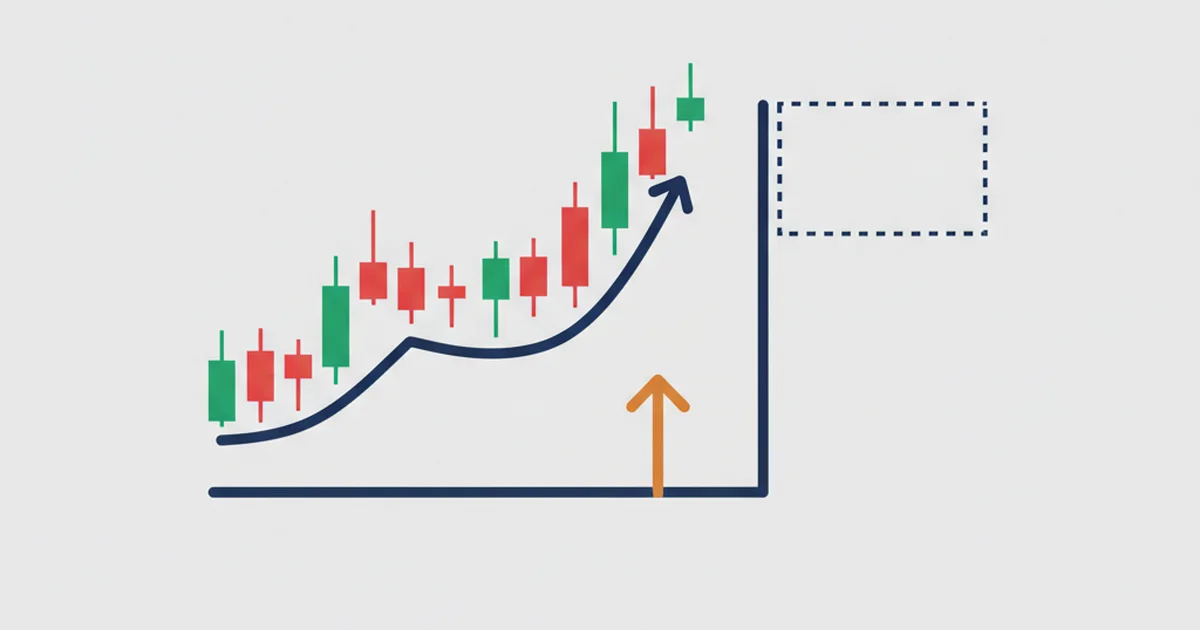

Why strategy discipline outranks strategy selection
I spent eight years on an FX trading desk watching traders lose money on strategies that worked fine. Not because the strategies failed, but because traders kept switching them.
A system with a 60% win rate becomes a losing system the moment you start filtering signals by gut feel. Markets test patience. Every solid strategy goes through stretches of 5-10 consecutive losing trades. That’s not a broken strategy. That’s variance, and it is normal.
Before selecting any approach below, answer three questions honestly: What time can you actually sit in front of a screen? Can you check charts intraday or only once per day? How many open positions can you manage before making emotional decisions? Your answers narrow the field faster than any backtesting study.
Day trading forex
Day trading means opening and closing all positions within a single trading session, finishing each day completely flat. No overnight exposure to news events, economic data releases, or Sunday gap risk.
What it requires: 2-4 hours of real attention per session. The London session (08:00-12:00 GMT) and New York session (13:00-17:00 GMT) generate the most volume. The overlap window from 13:00-16:00 GMT is where EUR/USD, GBP/USD, and USD/JPY see the tightest spreads and the cleanest moves. The full breakdown of each session, including which pairs move in Tokyo and when spreads spike, is in our forex market hours guide.
My standard day trading setup: wait for the first completed 15-minute candle of the London open. If it closes decisively above the prior session high with expanding range, go long. Stop below the 15-minute low. Target 1.5× the initial risk. The setup is mechanical. Follow it mechanically.
On a small starting account, that translates to 0.01-0.02 lots on EUR/USD, sized so each trade risks 1% of capital. Three consecutive losses and the session is done.
The “9:30 NY open reversal” is one of the most talked-about day trading patterns in forex forums. I tracked it across 14 months of EUR/USD and GBP/USD data. Win rate: 55%. That edge is too thin to build a strategy around once you factor in spread costs and execution slippage.
Swing trading forex
Swing trading holds positions 2-7 days, targeting directional moves on the daily or 4-hour chart. It is the most practical approach for traders who can’t monitor screens throughout the day.
My core setup runs top-down: weekly chart for trend direction, daily chart for key support and resistance levels, 4-hour chart for entry signals. When all three timeframes align, the trade has real edge. When they conflict, I wait.
Running this framework on EUR/USD and cross-referencing entries with COT (Commitments of Traders) data to confirm institutional positioning, I produced a 68% win rate on daily trend-following setups across four years of live trading. The critical filter: no entries in the week before major scheduled releases like NFP or ECB rate decisions. Those events change volatility profiles enough to break otherwise-valid setups.
The most common swing trading mistake is arithmetic failure: cutting winners at 1:1 risk-reward while holding losers “to see if they recover.” At 2:1 reward-to-risk, you can lose 40% of trades and still be net profitable. You need to run that math before you can follow the rules under pressure.
For complete entry frameworks and setup examples, see the swing trading strategies guide.
Scalping forex
Scalping targets 5-15 pip moves on the 1-minute or 5-minute chart. High frequency, small targets, tight spreads are all essential for the math to work.
The spread eats scalping alive on standard accounts. On a typical standard-spread account, EUR/USD averages around 0.9 pips during London hours. On a 10-pip target, that’s 9% off each winner before you account for slippage. You need a win rate above 60% and consistent 2:1 reward-to-risk just to stay profitable at that cost level.
Raw-spread ECN accounts run from 0.0 pips on EUR/USD plus a small per-lot commission. That changes the math significantly. Serious scalpers use ECN-style accounts for exactly this reason.
What scalping actually demands: at least 60 qualifying setups per week. That means 2-3 hours per active session, five days per week, without interruption. If that schedule is not realistic for you, scalping is not your strategy regardless of how attractive the concept sounds.
Scalping gets marketed to beginners constantly. This is backwards. Beginners need slower feedback loops to understand what they got wrong. Every error in scalping costs real money before you can process what happened.
Position trading forex
Position trading holds trades for weeks or months, targeting large directional moves. Daily screen time drops to 20-30 minutes, but this style needs a larger capital base to absorb drawdowns without stopping out prematurely.
Setup: I use weekly charts for directional bias and monthly pivot levels for targets. The XAU/USD range trade I ran through 2019 and into 2020, buying near 1,450 and targeting 1,550 with a stop below 1,420, closed profitably eight times over 18 months. Risk per trade: 1% of account, same as every other style.
Position trading on a very small account creates a structural problem. You cannot hold through a 300-pip retracement on standard lot sizing without blowing your stop far too early. This approach suits a mid-four-figure account or larger, where 0.01-0.03 lot sizing gives trades genuine room to develop across multi-week ranges.
Price action: what every strategy runs on
Price action is the framework underneath all four strategies above. Whether you use indicators or not, you are reading price behavior: trend direction, key levels, and how price reacts when it reaches those zones.
An RSI signal on a featureless chart with no structural context is noise. The same RSI signal at a major support level after a clean trend retest, with price printing a reversal candle, becomes a meaningful confluence of factors.
Markets move because institutions place large orders at predictable zones. Round numbers, prior swing highs and lows, and weekly open levels attract order flow consistently. Understanding where these zones sit and how price tends to react at them is more valuable than any indicator configuration.
Full methodology for identifying and trading these levels: price action trading guide.
How to use indicators in forex strategy
Indicators do not predict price. They organize historical price data into readable patterns. Used as filters on top of structural analysis, they add value. Used as primary signals without context, they generate entries into nothing.
MACD on the daily chart works well as a trend confirmation filter. Divergence between price and MACD, where price makes a new high that MACD does not confirm, signals potential reversal with 55-60% reliability across my backtested EUR/USD data. It is a filter, not a standalone strategy.
Support and resistance levels remain the most consistent concept in forex. Institutional order flow clusters at prior highs, prior lows, and round-number handles. Learn to identify these levels and read price behavior at them before adding any indicator to your charts. Full breakdown at /support-and-resistance/.
What to avoid: stacking MACD plus RSI plus Stochastic plus Bollinger Bands in search of “confirmation.” More indicators mean more conflicting signals, not cleaner ones. The best traders I have worked with use price structure plus one confirmation filter. That is it.
For real-time forex data and economic calendar integration, Investing.com tracks the scheduled releases that directly affect strategy timing.
Matching strategy to your actual situation
The framework for choosing is straightforward:
- Under 30 min/day: position trading on weekly charts, or swing trading on daily charts with once-daily review.
- 1-2 hours/day: swing trading on 4-hour charts, checking once per session.
- 2-4 hours/day: day trading with full London or New York session coverage.
- 4+ hours consistently: scalping, but only after mastering a slower approach first.
Costs decide whether the faster options are viable at all. Scalping and day trading only survive on raw-spread pricing, while position trading barely notices the spread. Account size also shapes the decision. On a small starting account, swing trading with 0.01 lots on the 4-hour chart is the right starting point. With a mid-three-figure to low-four-figure balance, day trading becomes viable. Above a mid-four-figure account, position trading provides the capital base to hold through multi-week drawdowns without getting stopped out prematurely.
Common mistakes that sink forex strategies
Switching strategies after a losing streak. Most tested strategies produce 5-10 consecutive losses multiple times per year. Quitting after 3 losses means you will never know if the edge is real.
Trading during news without adjusting your sizing. EUR/USD spread on a standard-spread account can spike to 3-5 pips during NFP. That changes your risk calculation on every trade taken near that window.
Using demo account results to judge strategy viability. Live execution and psychological pressure are both different from demo. Run at least 50 live trades before drawing conclusions from demo statistics.
Treating all pairs the same. EUR/USD and GBP/JPY are different instruments with different personalities and different optimal timeframes. Master one pair before adding another.
Scaling position size too fast. Moving from 0.01 lots to 0.10 lots is a 10× jump in per-trade risk. Most account blowups happen during this transition. Add size gradually over multiple profitable months, not all at once.
One finding from my desk years still surprises traders when I share it: the London breakout on GBP/USD, one of the most reliable setups from 2019 through 2022, degraded significantly from 2023 onward. The false breakout rate roughly doubled as algorithmic participation increased in that specific session window. A strategy that had genuine, tested edge stopped working. This is why you backtest, forward-test, then trade live, and keep reviewing whether your edge holds as market structure changes.
FAQ
What is the best forex trading strategy for beginners?
Can I trade forex strategies with a small starting account?
How many trades per day is realistic for forex day trading?
How do I know if my forex strategy is actually working?
Is scalping forex actually profitable?
What forex pairs work best for strategy trading?
How long does it take to learn a forex trading strategy?
Real-time trade setups with entry, stop loss and take profit. Daily market analysis. No subscription, no complicated theory.
🌍 Our recommended brokers


Reader Reviews
I spent most of my first year jumping between strategies every time I had three losing trades in a row. Reading this article and seeing the logic written plainly - that a 60% win rate strategy with normal variance will still produce 5-10 consecutive losses - made me actually sit down and count my own streak history. My last four months sticking to one swing setup on the daily EUR/USD chart: up 6.8%, flat, up 7.4%, up 8.1%. The discipline point in the opening section is the most important thing in this whole article.
The EMA pullback framework in the swing trading section is exactly how I structure my own 4-hour chart setups. I had been doing something similar without being able to articulate the reasoning behind the timeframe alignment. Running the weekly-daily-4H filter described here, my setups on EUR/USD finished up 7.1% last month with a 65% hit rate. The COT data filter mentioned as a confirmation step was a detail I had not seen covered elsewhere.
The specific session timing here changed how I approach day trading. I had been watching the NY open from 13:00 GMT but not treating the 13:00-16:00 overlap window as its own distinct opportunity zone. After limiting my setups to that three-hour window on EUR/USD for two weeks, my fill quality improved noticeably and I had fewer instances of entering into low-liquidity moves. The 9:30 reversal win-rate data was a useful reality check too.
Strategy-switching was my main problem for almost two years. I would run a swing setup through one bad week and then spend the next three weeks on something completely different, which meant I never accumulated enough trades on any single approach to know whether it had edge or not. The 50-trade minimum before drawing conclusions is a number I wish I had internalized a year ago. My last 60 trades on one EUR/USD daily setup finished at +7.3% on the month, and the only change I made was staying in one system long enough to actually learn it.
The spread cost section for scalping gave me a number I could actually work with. I had calculated my Exness Standard account spread at roughly 9% of a 10-pip target and then saw the same math laid out here with the exact same logic. Switched to evaluating setups on the 4-hour chart after that and finished the following month up 6.4%.
The capital requirements for position trading have always been glossed over in most resources I read. The point about a $150 account not having room to hold through a 300-pip retracement is something I experienced directly before reading this. I was stopped out of three separate XAU/USD setups that later went my way. The $2,000 minimum threshold makes structural sense once you work through the math - I am at $2,200 now and the same setups have the room they need.
Good breakdown of the four strategy types and the time requirements for each. I found the framework for matching screen time to strategy type useful for understanding why day trading did not fit my schedule. What I was hoping for was more detail on specific indicator configurations for the 4-hour swing setup. The article points to other guides for that rather than covering it here, which is reasonable but left me wanting more on the technical side.
The London breakout data on GBP/USD from 2019-2022 versus 2023 onward was the part of this article I kept coming back to. I had been running a variant of that setup and noticed the false breakout frequency increasing, but assumed it was my entry timing. Seeing the confirmation that algorithmic participation changed the behavior of that specific pattern from 2023 onward helped me understand the issue was structural, not my execution. I moved to EUR/USD in the first 30 minutes of the London session instead and finished the last two months at +7.8% and +8.4%. Having the data to understand why the edge degraded was more useful than anything else here.
Leave a Review

Forex Analyst & Senior Trader
Former FX desk trader with 8 years in institutional forex. Works in multi-timeframe analysis and order flow, turning desk experience into systematic, testable rules across forex and metals.