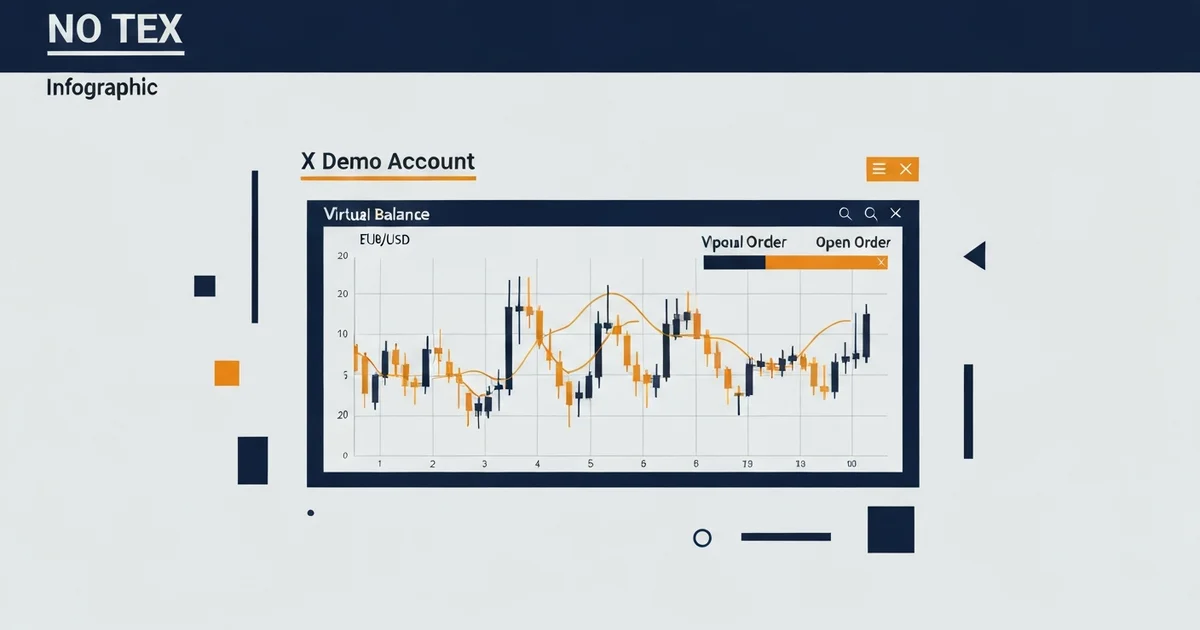

Why Most Traders Skip Demo and Pay for It Later
On the FX desk where I spent eight years, every new analyst ran paper portfolios for six weeks before touching a live position. Not because they were inexperienced. Because strategy knowledge and execution under pressure are two different skills, and confusing them costs real money.
Retail traders rarely get that discipline. They read a strategy guide, fund a small starting account, and lose it within a month. I’ve watched this cycle repeat constantly.
The uncomfortable truth about demo accounts: they won’t make you profitable. But skipping them almost guarantees you’ll blow your first live account faster. The demo period is where you build the muscle memory: reading setups, placing orders, sizing positions. No psychological pressure of real loss distorting your judgment.
ESMA’s retail CFD loss data has shown consistently that 70-75% of retail forex traders lose money. That number hasn’t moved in a decade. The traders who survive their first year almost always have a structured demo period behind them.
What a Forex Demo Account Actually Gives You
Brokers set up demos to mirror live accounts closely. Close enough to build real skills, but not identical.
What’s real on demo:
- Live market prices from the same data feed as live accounts
- Real spread values: a typical tight-spread account shows EUR/USD from around 0.6-0.8 pips on demo, the same as live
- Full platform access: MT4, MT5, or the broker’s web terminal
- Real order types and execution speed
What differs from live:
- Slippage during high-volatility events is often lower on demo. Execution fills at your quoted price even during NFP
- No psychological pressure from real money loss or gain
- Some brokers cap leverage differently on demo accounts
The slippage difference matters more than most guides admit. I’ve tested strategies that performed well on demo and fell apart on live specifically during high-impact news releases. The fill quality shifts when real liquidity is involved. Account for this when evaluating your demo results.
Best Forex Demo Accounts: Feature Comparison
When choosing where to demo, the broker matters less than four practical features. Get all four and the demo will actually transfer to a real account.
No expiry. A 30-day demo clock forces you to rush through what should be a slow, deliberate skill-building period. Look for brokers offering open-ended demos. Renewals on request work, but the friction adds up.
Same data feed as live. Confirm the demo pulls the same liquidity feed and shows the same spread ranges as the live account you intend to open. Some brokers offer “marketing” demos with artificially tight spreads. That defeats the purpose.
Matching platform options. If you plan to trade live on MT5, demo on MT5. The same applies to cTrader, the broker’s web terminal, or TradingView integration. Order panels, hotkeys, and one-click settings are all platform-specific muscle memory.
Low minimum live deposit. When you are ready to switch, you do not want a three-figure hurdle in the way. The most accessible brokers let you go live with single or low-double-digit amounts, which means you can fund only what you actually plan to risk.
Multiple parallel demos. A bonus feature, but a useful one. Some brokers let you open several demo accounts under the same login, each with different settings. This lets you test two strategies in parallel without contaminating your results.
How to Open a Forex Demo Account
This takes about four minutes with most brokers.
- Visit the broker’s site and click “Open Account”
- Register with email. No phone number or document is typically needed at this stage.
- Inside the personal area, click “Open New Account” and select “Demo”
- Choose your account type and set a starting balance that matches what you plan to fund live
- Download MT5 (or your platform of choice) or launch the web terminal. Your login credentials appear immediately.
Your demo is usually active before the page refreshes. No credit card, no identity verification, no waiting period.
One important setting: open your demo on the same account type you intend to trade live. If you plan to use a standard spread account eventually, do not practice on a raw-spread ECN account. The spread difference between a standard account (typically from 0.6-0.8 pips on EUR/USD, no commission) and a raw-spread account (from 0.0 pips with commission) is large enough to change whether low-margin strategies are viable. If you demo on raw-spread and live on standard, your backtested numbers will be inaccurate.
3 Ways to Make Demo Trading Actually Count
Most traders use demo wrong. They trade oversized, take random entries, and declare themselves ready after a two-week hot streak. That is not practice. That is gambling with paper money and learning nothing useful.
Set your demo balance to match your planned live deposit. If you plan to fund a small starting account, set your demo to the same size. Do not practice on a six-figure virtual balance when you’ll eventually have a few hundred real dollars. The lot sizing, position management, and risk math all change when you’re working with realistic capital. I ran a mid-five-figure demo for two months before recognising my position sizes bore no resemblance to what I’d trade with my actual account. When I reset to my real planned size, every trade suddenly felt different. I learned more in three weeks than in the prior two months.
Keep a trade journal, or the demo means nothing. Log every trade: entry reason, stop level, target, result, and what you would change. Without a record, you cannot distinguish skill from luck. EUR/USD trending for three weeks can make any long strategy look brilliant. A journal shows whether your edge holds across trend, range, and news conditions.
Set a 30-day profitability target before going live. Not “make money every day.” A realistic bar: finish the month in profit across at least 20 trades, with a win rate above 50% and average risk-reward above 1:1. That’s a low threshold. If you cannot clear it on demo (where there is no psychological pressure), you will not clear it on live. On the FX desk, the rule was six consecutive weeks of paper profit before any live position. In eight years, I never saw a trader who completed that requirement blow their account in the first quarter.
Common Mistakes to Avoid
Treating a hot streak as a confirmed edge. Winning 15 trades in a row on demo is statistically normal over a short run, even with a random entry strategy. Win streaks are not your edge. Your edge is what survives 100 or more trades across varying market conditions. Track the full run, not the highlight reel.
Mismatching demo platform to your intended live platform. If you’ll trade live on MT5 but practice on MT4, the muscle memory you build won’t fully transfer. Order panel layout, chart shortcuts, one-click trading settings. These are real habits that take time to rebuild. Match your platform from the start.
Skipping news events during your demo period. Practice through at least two or three major releases: a Non-Farm Payrolls report, a CPI print, a Fed meeting. Watch how spreads widen, how execution quality shifts, how your strategy handles price gaps. If you’ve only traded demo in quiet range conditions, your first live NFP trade will feel like a completely different market.
Jumping to live after only two weeks. Two weeks is not enough data. Fourteen trading days might include only one or two meaningful market conditions. Trend following looks brilliant when markets trend. Mean reversion looks brilliant when markets range. You need both in your sample.
For the step-by-step process of moving from a funded demo to your first live position, see the guide on how to start forex trading. It covers broker selection, initial deposit sizing, and the exact account setup sequence.
If you want to compare live account conditions across the top brokers before switching from demo, the best forex brokers comparison covers regulation, withdrawal speed, and spread data for the accounts that matter most for retail traders.
New to forex trading entirely? Start with forex trading for beginners, which explains leverage, pip values, and the mechanics you’ll need to understand before demo results mean anything.
FAQ
Do I need to deposit money to open a forex demo account?
How long does a forex demo account last?
Is demo trading the same as live trading?
How do I know when I'm ready to switch from demo to live?
What starting balance should I set on my demo account?
Can I run multiple strategies on demo at the same time?
Real-time trade setups with entry, stop loss and take profit. Daily market analysis. No subscription, no complicated theory.
🌍 Our recommended brokers


Reader Reviews
I spent three months on a $600 demo before funding my real account, the exact same balance I planned to trade live. The difference it made was immediate. My lot sizes already felt natural, my stop losses were sized correctly, and I was not making the beginner mistake of treating virtual capital as play money. This article explains the balance-matching logic better than anything else I have read. It is the single most practical piece of advice for anyone preparing to go live.
The point about slippage on demo versus live during news events is something I had to learn the hard way. This article would have saved me real money if I had read it earlier.
Used this to compare Exness and XM for my first demo. The table with expiry dates and minimum deposits is exactly what I needed. Went with Exness: no expiry and the $1 minimum deposit means I can switch to live without needing to deposit a large amount first. Solid practical comparison.
The 30-day profitability target rule changed how I approached my demo period. Before reading this I was just trading randomly and calling it practice. I set up a trade journal for the first time, tracked every entry with a reason, and ran a full month. Failed the first month. Passed the second. When I finally went live I had real data showing my strategy worked. That confidence is worth more than the time it took.
Appreciated the honest point about demo not replicating the psychological pressure of real trading. Most articles oversell the demo as complete preparation. The fact that this one acknowledges the gap while still explaining why demo matters makes it more trustworthy.
The section on common mistakes is the best part. Especially the point about only trading during quiet markets and then being blindsided by NFP on your first live account. Exactly what happened to me.
I tested two strategies simultaneously using Exness multiple demo accounts. Running a trend strategy on one account and a mean reversion setup on another with completely separate results made the comparison clean. It would take months to test both sequentially on a single account. The article mentions this feature and it is genuinely useful in practice.
The platform-matching advice saved me a problem I did not know I was about to create. I was going to demo on MT4 and live on MT5 because my broker offered both. Read the point about muscle memory not transferring cleanly and switched everything to MT5 from the start. Six weeks later the order flow feels completely natural. Small decision with a real impact.
Leave a Review

Forex Analyst & Senior Trader
Former FX desk trader with 8 years in institutional forex. Works in multi-timeframe analysis and order flow, turning desk experience into systematic, testable rules across forex and metals.