
What Dub actually is
Dub launched in 2022 with a straightforward pitch: pick a professional investor, invest any amount, and your account mirrors their exact portfolio in real time. No signal lag, no manual execution. Your positions update when theirs do.
That’s meaningfully different from signal-based copy trading. On ZuluTrade or MT4 copy setups, you receive trade alerts and execute individual entries. On Dub, you hold a proportional slice of the expert’s complete portfolio. If they own 45% tech stocks and 10% cash, your $600 is allocated the same way, down to fractional shares.
I tracked $600 across two Dub copy trading strategies for 60 days in early 2026 while running my usual crypto momentum setups on my broker. The comparison gave me a clear picture of where Dub fits and who it actually serves.
How Dub copy trading works
Browse the strategy marketplace, pick an expert, fund your account. Dub handles all execution automatically from that point.
Three mechanics separate Dub from every other copy platform I’ve tested:
You own the actual securities. On Bitget or eToro, copied positions may not involve you directly owning the underlying asset. On Dub, you hold real US shares in a FINRA-regulated brokerage account, SIPC-insured up to $500,000. For US traders, that custody protection matters more than most platforms advertise.
Real-time portfolio transparency. At any point you can see the complete holdings list, exact weights, and individual position performance. Nothing is obscured behind a strategy label or locked in a black-box performance chart.
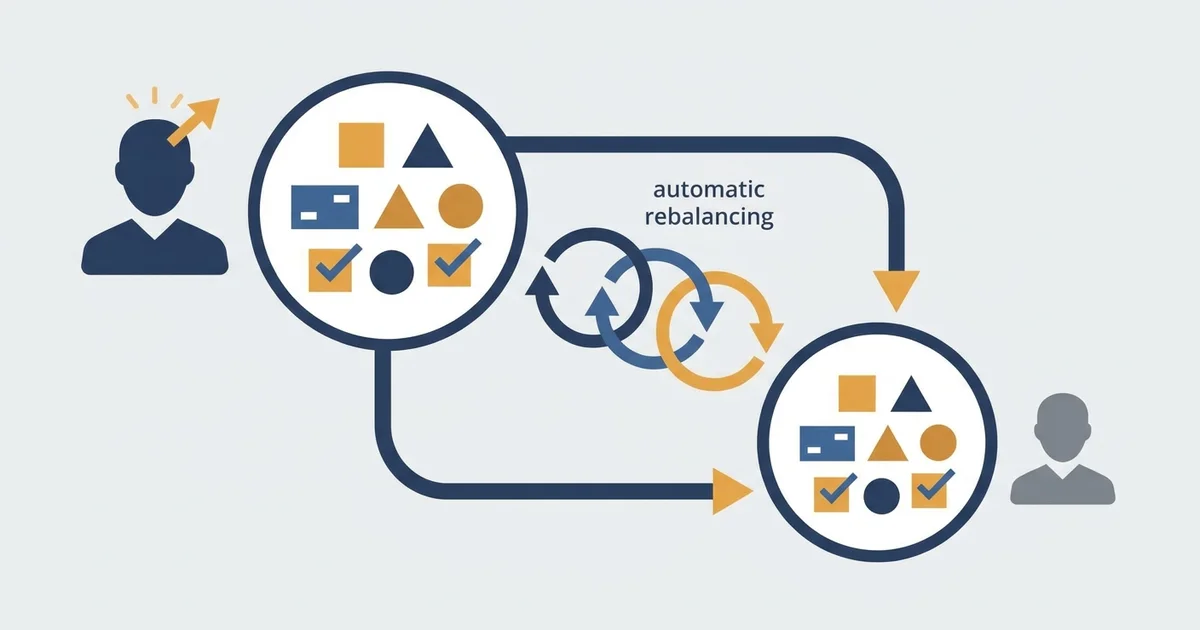
Automatic rebalancing. When the expert adds a position, trims one, or moves to cash, your account adjusts within minutes. No alerts, no approval, no slippage from delayed execution.
The app itself is clean and fast to navigate. Setup including identity verification took under 10 minutes. The significant trade-off: Dub covers US-listed equities only. No crypto, no forex, no commodities.
Dub fee structure: what you actually pay
Two costs stack when you copy a strategy on Dub.
Strategy performance fee: Set by the expert creator. Range: 0–20% of net profits per year. Most popular strategies charge 10–15%. Newer traders building their track record often list at 0% to attract followers, which creates some genuinely interesting finding opportunities if you filter by drawdown data rather than star rating.
Platform subscription: Dub charges a monthly fee for full marketplace access. A free tier exists but restricts which strategies you can copy. Paid access unlocks the complete expert list with full performance history.
The math on a $600 account, 12% annualized gross return, 15% performance fee:
- Gross return: $72 per year
- Strategy fee (15% of $72): $10.80
- Net before platform fee: $61.20, roughly 10.2% net annualized
At $600, that fee drag is workable. At $200 or below, the economics deteriorate fast. I’d treat $500 as the practical minimum for Dub to make financial sense over a 12-month hold.
Getting started: how the setup works
The onboarding is genuinely simple. Here’s the sequence:
- Download the Dub app (iOS or Android) and create an account using your email.
- Complete identity verification. Standard KYC: government-issued ID, SSN for US residents. Approval typically takes 2–10 minutes.
- Fund via ACH or wire. ACH bank transfers settle in 1–3 business days. Wires are same day. Minimum: $1.
- Browse the strategy marketplace. Filter by performance period, asset focus, and fee level. Sort by 12-month return divided by max drawdown. The default Featured view is based partly on follower count, not pure performance.
- Select a strategy and set your allocation. Enter a dollar amount. Dub fractionates it to mirror the expert’s portfolio weights in real time.
- Monitor from the app. Every holding, its weight, and performance since you copied is visible at all times.
One practical note on ACH: your capital won’t deploy for 1–3 business days after the transfer. If the underlying market moves significantly in that window, your entry cost basis may differ from the expert’s current average. Minor issue on longer time frames, but worth knowing before your first copy.
60 days of real results
I ran two strategies simultaneously to get a direct comparison.
Strategy 1: Momentum, US tech focus. Returned 8.3% over 60 days (roughly 17% annualized). The period coincided with a significant US tech rally, so that tailwind matters for context. The strategy’s 12-month maximum drawdown going in: 14%. Acceptable for an aggressive momentum approach.
Strategy 2: Diversified, lower volatility. Returned 2.1% over 60 days (about 13% annualized) with a 7% max drawdown. Less exciting on paper, but the steadiness actually makes the risk-adjusted return competitive with Strategy 1.
The counterintuitive finding: Dub’s featured and highest-rated strategies by star rating didn’t match the top performers by 12-month return. The platform’s rating system weights follower count and community engagement alongside actual numbers. The most-followed strategy in my category had a 12-month return below the platform median.
After testing this the hard way, I filter now by 12-month return divided by maximum drawdown: it surfaces completely different names than the featured section does. I’ve seen the same social-popularity-versus-actual-edge gap on crypto copy platforms, particularly Bitget. Popularity and performance diverge fast once you look past three months.
Who Dub is for (and who it isn’t)
Dub works well for one specific type of trader: US-based investors who want passive, professionally-managed equity exposure at well below traditional advisory costs.
For most readers here, three limitations apply:
US residents only. Dub is a registered US broker-dealer. Traders in Europe, Southeast Asia, MENA, or anywhere outside the US cannot open accounts.
No forex or crypto. Dub’s marketplace covers US stocks and ETFs. EUR/USD, BTC/USDT, XAU/USD are not available. For copy trading crypto with global access, Bitget offers a deep marketplace of crypto signal providers with a $10 minimum allocation.
No active trading alongside copied strategies. Dub accounts are structured around the copy model. You can’t run manual positions in the same account as a copied strategy. Active traders who want to supplement their own setups, not replace them, will find this constraining.
Dub vs. other copy trading platforms
| Feature | Dub | Bitget | eToro | ZuluTrade |
|---|---|---|---|---|
| Asset classes | US stocks/ETFs | Crypto futures | Stocks, Crypto, FX | Forex, Crypto |
| Availability | US only | Global | Global (excl. US) | Global |
| Minimum to copy | $1 | $10 | $200 | $300 |
| Fee model | Performance % | Free | Spread markup | Signal provider fee |
| SIPC protection | Yes | No | No | No |
| Crypto support | No | Yes | Yes | Limited |
ZuluTrade connects directly to my broker as the execution broker, putting professional forex signal providers on major pairs into your account with tight spreads. Different use case than Dub, but the direct comparison point for anyone wanting managed forex exposure. The full side-by-side across all major copy platforms is in the best copy trading platforms guide.
Common mistakes on Dub
Sorting by recent return alone. Three months of outperformance during a bull market tells you almost nothing about edge. Look at 12-month max drawdown alongside return. A strategy up 30% with a 28% drawdown carries very different risk than one up 20% with a 9% drawdown.
Starting with $200. At that account size, even a 0% performance fee strategy still loses purchasing power to Dub’s platform subscription over 12 months. The practical floor: $500.
Copying too many strategies at once. Three strategies at $200 each fragments capital without meaningful diversification. The portfolios frequently overlap in the same large-cap names. One or two strategies at $500–$1,000 each gives cleaner, more manageable exposure.
Ignoring US tax implications. High-turnover strategies trigger frequent taxable events. Check rebalancing frequency before copying, especially in taxable accounts. Some Dub experts rebalance weekly, generating a significant volume of short-term capital gains events if you’re not in a tax-advantaged account.
Copying a strategy mid-run. If an expert is holding unrealized gains on positions, you inherit a higher average cost than theirs. Best entry point is after a meaningful correction in the strategy’s equity curve, not at all-time highs.
Verdict
Dub is well-built for its intended user: US investors who want professionally-managed stock portfolios without paying traditional advisory minimums or commissions. The custody model, transparency, and execution quality are genuinely better than most retail alternatives in the managed-portfolio space.
For forex and crypto traders, and anyone outside the US, it’s the wrong tool. Bitget and BingX cover crypto copy trading with global access and no account minimum restrictions. ZuluTrade covers managed forex. If you’re still mapping out the options before committing, the best copy trading platforms comparison covers the full landscape.
FAQ
Is Dub available outside the US?
What is the minimum amount to start copy trading on Dub?
How does Dub make money?
What happens if the expert I'm copying starts losing?
Can I copy trade crypto on Dub?
Is Dub regulated and safe?
How do I choose which strategy to copy on Dub?
Real-time trade setups with entry, stop loss and take profit. Daily market analysis. No subscription, no complicated theory.
🌍 Our recommended brokers


Reader Reviews
I tracked the fee math before opening an account. At $600 with a 12% annual gross return and 15% performance fee, you keep roughly 10.2% after the strategy cut - which is competitive with a lot of actively managed accounts I've seen. The SIPC coverage up to $500,000 is what actually closed it for me. I've been with three platforms in the last two years that held synthetic positions with zero custody protection. Three months in, momentum strategy running at 14% annualized with a 9% max drawdown. The holdings list showing exact weights is something I haven't found done this cleanly on any other retail platform.
The holdings transparency alone is worth testing. Every position, exact weight, performance from entry date - visible within 5 minutes of copying. I put $500 into a diversified strategy and could see exactly what I owned with no guessing about what the expert is actually doing.
The guidance to filter by return-to-max-drawdown ratio instead of the featured section is genuinely useful. I picked a strategy with a lower star rating but a 1.8 ratio on that metric. Two months later it's outperforming the highest-rated options I looked at initially. Knocking one star because the platform subscription cost at smaller account sizes really does eat returns faster than most reviews acknowledge.
Ran the 60-day comparison myself after reading this. Put $500 into a tech momentum strategy and another $500 into a lower-volatility diversified one. Same dynamic described here - the high-follower strategy in my category was sitting below the platform median on 12-month return. Found a lower-profile strategy with a 1.6 return-to-drawdown ratio and it's the one actually performing. The counterintuitive finding about popularity vs. performance tracks exactly with my experience on Bitget. Social proof and real edge diverge fast once you look past three months.
The minimum account size analysis is the most practical section. $500 is the right floor for the fee math to work, and most platforms won't tell you that upfront. Four stars instead of five because the rebalancing frequency and tax event section is brief for anyone in a taxable account. That's a real consideration if you're copying a high-turnover strategy.
Clear, honest comparison table. Dub vs Bitget vs eToro vs ZuluTrade laid out by what actually matters: assets, availability, minimum, fee model, custody protection. Saved this to share with two friends who asked about copy trading last week.
The common mistakes section is what separates this from a generic review. Copying too many strategies with overlapping large-cap names, starting below $500, entering after an equity curve all-time high - these are specific, actionable warnings from actual experience. The mid-run entry point note is something most beginner copy traders find out the hard way, usually after it costs them.
I appreciated the honest breakdown of what Dub is not for. The explicit statement that forex and crypto traders and anyone outside the US should use other platforms - rather than trying to sell the product to everyone - made me trust the review more. Most copy trading platform pieces try to make everything sound suitable for every audience. This piece names the specific user profile Dub actually serves and points non-US readers toward alternatives directly. The 60-day account data with two parallel strategies adds weight that a simple feature list never would.
Leave a Review

Momentum Trader & Technical Analyst
Trades momentum across crypto and forex since 2019, built around RSI, MACD, and volume. Turns discretionary setups into rule-based, systematic entries and validates them on data before they go live.