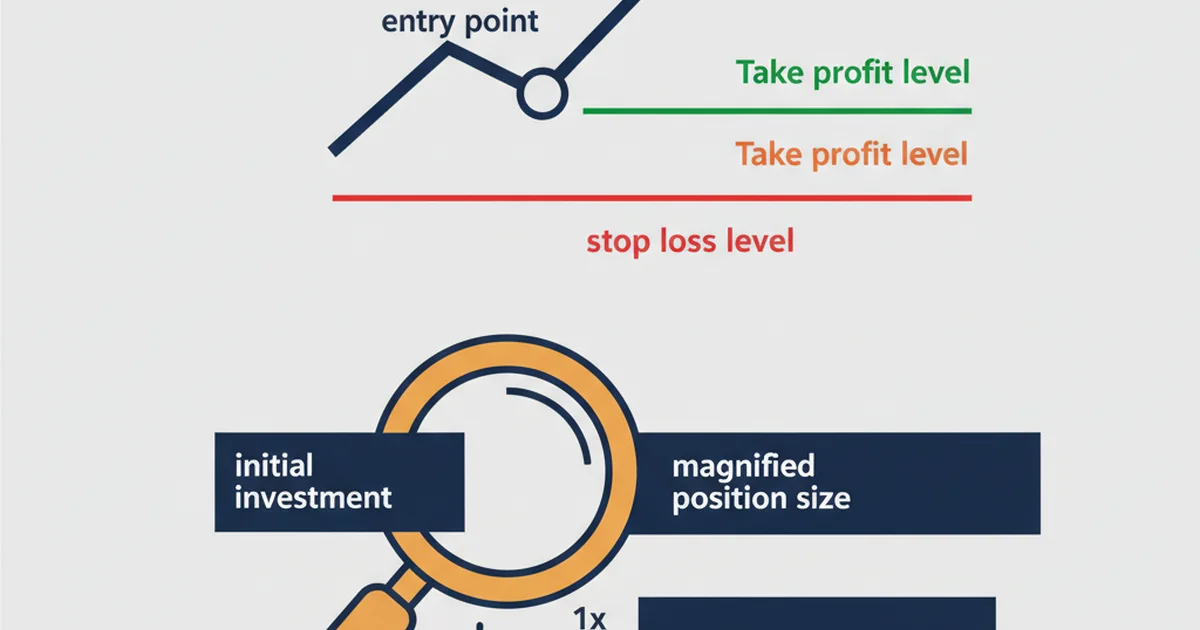

Why Most Retail Traders Are Already Using CFDs
Most retail traders use CFDs without knowing it. If you’ve ever traded EUR/USD with a retail forex broker, that was a CFD, not actual currency exchange. When you “buy” gold or oil on a trading platform, you’re not taking delivery of physical metals or barrels. You’re opening a CFD position and speculating on the price.
I spent 8 years on an FX trading desk before trading independently. Every position we managed was a CFD, including the larger institutional allocations. Understanding this distinction changes how you think about risk, costs, and strategy selection.
CFDs are designed for active speculation, not long-term holding. Overnight financing fees (swap rates) make extended holds expensive. But for day trading, swing trading, and short-term forex strategies, CFDs are the primary instrument and, on regulated platforms, a well-understood one. The overnight financing rate is where the platforms differ most, and it is rarely on the front page: financing costs checked on a live account tell you more than the advertised spread does.
How CFD Trading Works
When you open a trade on EUR/USD at 1.0800 and close it at 1.0850, the broker credits the difference to your account. That 50-pip move at 0.01 lots equals $5 profit.
Opening a position: You pick a direction (buy or sell), select a position size in lots or units, and the trade opens at the current market price.
Holding the position: Your unrealized profit or loss updates in real time as price moves. If you’re long (buy) and price rises, your account shows a profit. If price falls, it shows a loss.
Closing the position: You close at the current market price. Profit or loss is calculated as the price difference multiplied by your position size.
Simple example: You open a buy (long) on EUR/USD at 1.0800 and close at 1.0850. That’s 50 pips difference. At 0.01 lots (1,000 units), the profit is $5.
The key point: you never own the euros. The broker settles the cash difference in your account currency. No clearing houses, no settlement periods, no custody of assets.
CFD vs Buying the Real Asset
| CFD | Real asset | |
|---|---|---|
| Own the asset | No | Yes |
| Go short | Yes | Requires borrowing (short selling) |
| Leverage available | Yes (up to 1:500 on some brokers) | Typically no |
| Overnight financing | Yes (swap/rollover fee) | No |
| Dividends | Cash adjustment | Received directly |
| Best for | Short-term price speculation | Long-term holding |
If you plan to hold Bitcoin or shares for years, buying the real asset is cleaner. But if you’re trading price movements over hours, days, or weeks, CFDs give you three things: leverage, the ability to go short, and no asset custody complexity. For day trading, these advantages make CFDs the default instrument.
What You Can Trade as CFDs
Most regulated brokers offer CFDs across five main categories:
Forex pairs: EUR/USD, GBP/JPY, USD/JPY, and 40-50 other pairs. Highest liquidity, tightest spreads, 24-hour market five days a week. On a raw-spread account, EUR/USD spreads during London session run 0.0-0.3 pips. The forex CFD market is the most liquid retail trading environment available.
Stock indices: S&P 500 CFD (US500), Nasdaq 100 (NAS100), DAX 40, FTSE 100. You’re speculating on index-level price movement, not buying individual shares. Useful for macro-directional views. These are classified as CFD instruments and framed as such on retail platforms.
Commodities: Gold (XAU/USD), crude oil (WTI, Brent), silver, natural gas. Gold CFDs are among the most actively traded instruments on retail platforms. The daily range on XAU/USD is typically 15-25 USD, enough for meaningful intraday setups.
Crypto CFDs: Bitcoin, Ethereum, Solana available as CFDs on forex brokers. Higher volatility, wider spreads, and lower depth than forex. Typical retail brokers run BTC/USD spreads of roughly $50-200 depending on session and volatility.
Individual shares: Apple, Tesla, Meta available as CFDs on most brokers. Spreads are wider than on equity exchanges, and liquidity thins out during off-hours. For most retail traders, indices are a cleaner alternative to individual stock CFDs.
For beginners, start with major forex pairs. The spreads are tightest, execution is fastest, and the market structure is more predictable than crypto or individual shares.
CFD Leverage and Margin Explained
Leverage is the most misunderstood part of CFD trading. Here’s how it works with real numbers.
Leverage means the broker lets you control a position larger than your deposit. At 1:100 leverage, $100 in your account controls $10,000 worth of EUR/USD.
Margin is the minimum deposit required to hold that position. At 1:100 leverage, you need $100 margin to hold a $10,000 position. That $100 is not your cost. It’s collateral held by the broker while the trade is open.
Practical numbers for a small starting account at 1:100 leverage:
- Maximum position is far larger than you should ever use
- Responsible position at 2% risk per trade: 0.02-0.03 lots on EUR/USD
- At 0.02 lots, a 100-pip stop loss equals about 3.3% of the account
- At 0.03 lots, a 100-pip stop loss equals 5% of the account, too high
The right lot size is determined by your stop loss distance and risk percentage, not by how much leverage you have available. I watched retail clients on the desk use 0.5-1.0 lots on undercapitalised accounts. That’s not trading — that’s gambling with leverage as the excuse.
On a very small starting balance: 0.01 lots per trade with a 150-pip stop sits at roughly 10% of account risk — still high, but manageable for learning. With a slightly larger balance: 0.02-0.03 lots with 50-pip stops gives you proper 2% risk per trade.
Reading a CFD Quote
Every CFD quote shows two prices: the bid (sell price) and the ask (buy price). The spread is the difference between them.
Example: EUR/USD quote is 1.08005 / 1.08015
- Bid: 1.08005 (price you sell at to open a short, or close a long)
- Ask: 1.08015 (price you buy at to open a long, or close a short)
- Spread: 1.0 pip
When you open a buy position, you enter at the ask price. When you close it (sell to exit), you receive the bid price. The spread is the broker’s built-in transaction cost on every trade. No separate commission on Standard accounts.
Typical account types at retail forex brokers:
- Standard: no commission, spread on EUR/USD runs 0.9-1.3 pips during London session. Good for position traders and beginners.
- Pro (raw spreads): spreads from 0.0-0.3 pips plus a small per-lot commission (round trip). Better for active traders doing more than 20-30 trades per month.
For most beginners, Standard accounts are fine. The commission math on Pro only wins when you’re trading at volume.
A Real CFD Trade Example
Here’s how a EUR/USD CFD trade actually plays out, step by step.
Setup: Tuesday, London open at 08:15 UTC. EUR/USD sits at 1.0785 after overnight consolidation. The daily chart shows a clean support zone at 1.0760-1.0770 that held twice in the prior week.
Entry analysis: I wait for price to pull back into the support zone before entering. At 08:45 UTC, EUR/USD touches 1.0768 and shows a rejection wick on the 15-minute chart. I enter a buy (long) at 1.0772 (ask price). Position size: 0.02 lots, risk budget 2% of account.
Stop loss: Placed at 1.0735, below the prior session low and below the support zone. That’s a 37-pip stop. Risk calculation: 37 pips × $1/pip per 0.01 lots × 2 = $7.40 (0.93% of account).
Target: 1.0870, the next resistance level from the daily chart. That’s 98 pips from entry, a 2.6:1 risk/reward ratio.
Result: Price rallied to 1.0853 before stalling. I closed manually at 1.0850 (bid price) after seeing a bearish pin bar on the 1H.
Profit calculation: (1.0850 - 1.0772) × 0.02 lots × 100,000 units = $15.60. After the 1-pip spread on entry and exit, net profit approximately $13.40.
Not a large return in absolute terms. But this is what consistent CFD trading looks like at a learning-scale account. Over 12 similar setups in a month at 60% win rate with 2.6:1 R:R, the returns add up. The traders who lose on CFDs aren’t losing because their strategy is wrong — they’re losing because they size up on winners and don’t cut losers.
According to Investopedia’s CFD overview, CFDs are considered complex instruments, and regulatory disclosures on major brokers show that 70-80% of retail CFD accounts lose money. Position sizing is the primary differentiator between the accounts that don’t.
Risks of CFD Trading
CFDs carry specific risks that standard financial advice undersells:
Leverage losses compound fast: A 50-pip move against an oversized 0.1-lot position can run a quarter of a small account in a single trade. That’s not a disaster if your stop is in place. It’s a disaster if you removed the stop “just to give it room.”
Overnight swap fees: Holding a CFD overnight costs a financing charge (or earns one, depending on direction and instrument). EUR/USD long swap at typical retail brokers runs around -$4.50 per lot per night. On small positions: negligible. On larger holds over weeks: it adds up. Slow-moving trades with narrow targets get hurt most by the cumulative cost.
News event spread spikes: On the desk, we closed positions or widened stops before major data releases: NFP, CPI, ECB rate decisions. During NFP, EUR/USD spreads spike to 5-10 pips even on raw spread accounts. If you’re in a tight trade when that hits, the spread widening alone can trigger your stop. Either close before news or accept wider stops as part of the trade plan.
Counterparty risk: With CFDs, you’re trading against the broker, not an exchange with a central clearing house. Regulated brokers under FCA, CySEC, or ASIC are required to hold client funds in segregated accounts. Offshore, unregulated brokers may not. The leverage a broker offers is a secondary consideration. Regulation is primary.
The counterintuitive reality from desk experience: retail traders lose on CFDs primarily due to position sizing and emotional management, not because the instrument is fundamentally broken. After 8 years watching institutional flow, I can confirm that the CFD structure itself doesn’t create the losses. Undercapitalized traders using maximum leverage create the losses.
For a deeper understanding of the psychological side of this, the trading psychology guide covers the specific patterns that lead to oversizing and revenge trading.
Common Mistakes to Avoid
Using maximum available leverage: 1:500 leverage is not an opportunity. It’s a system designed to let you lose your deposit in minutes. Start at 1:30 to 1:100 and stay there until your strategy shows consistent positive expectancy over at least 50 trades.
Trading without a stop loss: “I’ll watch it and close manually” fails when the market gaps, when you’re asleep, when you’re distracted. Set the stop at trade entry. Non-negotiable.
Ignoring swap fees on multi-day holds: A long EUR/USD position held for 10 days costs roughly $45 in swap per lot. If your target is 80 pips ($80 per lot), swap fees reduce that by more than half on larger positions. Factor this into your risk/reward calculation before entering.
Confusing CFD indices with equity investing: The S&P 500 CFD (US500) gaps at market open, responds to pre-market futures, and doesn’t pay dividends (only an adjustment). It’s not the same as owning SPY shares. Trade it as a short-term directional instrument, not an investment vehicle.
Choosing brokers for leverage limits alone: The difference between 1:200 and 1:500 leverage is irrelevant if you’re using 0.01 lots. The difference between a regulated broker and an unregulated one is your entire account balance. Choose regulation first, spreads second, leverage last.
If you’re new to currency markets generally, the forex trading for beginners guide covers the foundations before you put real capital on the line. For traders ready to scale with institutional-level risk parameters and funded accounts, prop trading firms operate entirely through CFD instruments.
FAQ
What is CFD trading in simple terms?
Is CFD trading profitable?
How much money do I need to start CFD trading?
What is the difference between CFD trading and forex trading?
What can you trade with CFDs?
What are the risks of CFD trading?
What is the best broker for CFD trading?
Real-time trade setups with entry, stop loss and take profit. Daily market analysis. No subscription, no complicated theory.
🌍 Our recommended brokers


Reader Reviews
The leverage section finally connected the concept to something I could calculate before each trade. I was on a $400 account using 0.1 lots, which the article's lot-size formula shows puts $10 at risk per pip. With a 60-pip stop loss I was risking $60 per trade, or 15% of my account in a single position. That math had never been laid out clearly before I read this. After resizing to 0.02 lots with a 50-pip stop, my risk per trade dropped to $10 and my account stopped swinging 15% on individual setups. Over the next month I ran 14 trades at that size and finished at plus 6.8%. The article didn't give me a strategy but it fixed the variable that was making every strategy fail.
The EUR/USD trade walkthrough from entry to exit with actual pip calculations made the cost structure concrete. Entry at the ask, exit at the bid, spread factored into net profit - I had been ignoring that round-trip cost entirely. Specific and clear in a way most CFD explanations avoid.
The overnight swap section changed how I filter setups. I was holding EUR/USD positions for 3-5 days without accounting for the nightly financing charge. At minus $4.50 per standard lot per night, a 4-night hold eats into a narrow target significantly. I now only take overnight CFDs when the target is at least 3x the projected total swap cost. That filter alone removed most of the positions that had been sitting flat and eroding.
The explanation that standard retail forex is CFD trading and not real spot FX changed how I think about the instrument I trade daily. I had assumed my broker account connected to the interbank market. Understanding that I'm trading a price-tracking CFD with the broker as direct counterparty, not against an exchange with a clearing house, completely reframed how I evaluate broker selection and the significance of regulation. It doesn't change individual trade management but it changes which brokers I trust with my capital. Moved from an offshore broker to a CySEC-regulated one after reading the counterparty risk section.
The regulation-first hierarchy is stated plainly and most content gets it backwards. The difference between 1:200 and 1:500 leverage is meaningless at 0.02 lots. An unregulated broker taking your deposit balance is not. Short section, essential point.
The Standard versus Pro account breakdown helped me stop second-guessing my account type. At 10 trades per month with 0.02 lots, the commission savings on a Pro account are negligible in dollar terms. The article's break-even analysis makes this clear rather than just listing features. I stayed on Standard and put the mental energy saved into trade quality instead.
The counterparty risk section is more important than its length suggests. CFD trading means trading against the broker, not against a regulated exchange. On an FCA or CySEC broker this is managed through segregated accounts and oversight. On an offshore platform it is a direct credit exposure. I had been using an offshore broker for nine months. Moved accounts within a week of reading this.
The $150 minimum account explanation is the most honest version of that number I have seen. Most content either ignores minimum deposits or frames any size as sufficient for real trading. This article is specific - at $150 you trade 0.01 lots with a 150-pip stop at $15 risk, which is 10% per trade and still high by professional standards. It doesn't claim $150 is comfortable, only that it's the smallest amount where the numbers connect to real risk principles. I started at $200 using the lot-size formula from day one and ran 23 trades over three months. Account finished at $229, which isn't exciting but intact. That is apparently more than most beginners can say at that size.
Leave a Review

Forex Analyst & Senior Trader
Former FX desk trader with 8 years in institutional forex. Works in multi-timeframe analysis and order flow, turning desk experience into systematic, testable rules across forex and metals.